Why Brushing Your Artificial Football Pitch Should Be a Core Part of Your Maintenance Programme
For professional grounds teams, maintaining an artificial football pitch is about far more than keeping the surface looking good.
A synthetic pitch is a working surface that takes considerable punishment. Regular training sessions, competitive fixtures, changing weather conditions and constant player traffic all place demands on the carpet, infill and underlying system. Without an effective maintenance programme, the pitch can quickly become compacted, uneven and less consistent underfoot.
One of the simplest and most important maintenance operations is regular brushing.
Used correctly and at the appropriate frequency, brushing helps keep infill mobile, fibres upright and the playing surface consistent. For busy football facilities, tractor-mounted brushing equipment can make this essential task considerably faster and more effective.
Keeping the Infill Moving
The infill within an artificial football pitch plays an important role in the performance of the surface. However, repeated use causes the infill to migrate and become compacted, particularly in high-traffic areas such as goalmouths, penalty areas and central playing zones.
Regular brushing helps redistribute the infill across the pitch, preventing it from becoming concentrated in certain areas and depleted in others.
Maintaining a consistent infill depth is important because it helps provide more consistent playing characteristics across the surface. It can also help reduce the risk of fibres becoming exposed as infill levels fall.
For grounds professionals, the objective is not simply to move material around the pitch- it is to maintain the correct relationship between the pile and the infill throughout the playing surface.
Helping Prevent Compaction
Compaction is one of the key issues associated with heavily used synthetic pitches.
As players repeatedly run, turn and tackle on the surface, infill can become tightly packed. A compacted surface can affect drainage and alter the way the pitch performs.
Brushing helps agitate the upper layer of infill, keeping it mobile and helping to prevent the surface from becoming excessively compacted.
This is where the choice of brush becomes particularly important.
A conventional light drag brush has an important role within a regular maintenance programme, but more aggressive powered brushing can provide additional decompaction when the surface requires it.
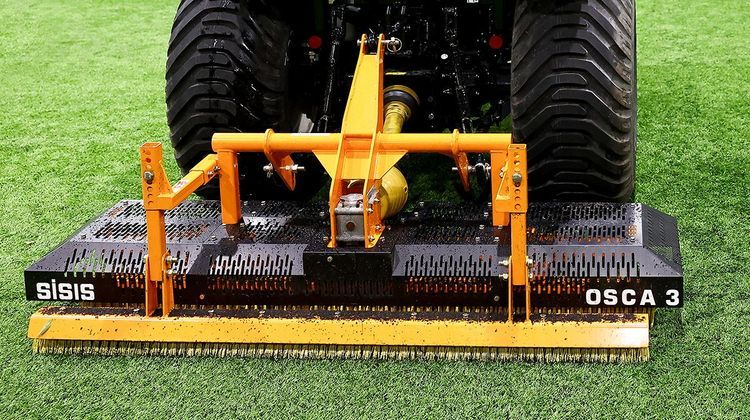
The SISIS OSCA 3, for example, uses a pair of oscillating brush units to provide an aggressive brushing action. This helps agitate the upper infill layer, encouraging the material to remain mobile and helping to maintain surface porosity.
Standing the Fibres Back Up
Another major benefit of brushing is the effect it has on the synthetic fibres.
With regular use, fibres can become flattened in the direction of player traffic. Over time, this can affect surface presentation and potentially contribute to uneven playing characteristics.
Brushing lifts the fibres back towards an upright position, helping the carpet maintain a more consistent appearance and playing surface.
This doesn't mean every brushing operation needs to be aggressive. In fact, a professional maintenance programme should use the appropriate brushing intensity for the condition of the pitch.
For routine work, a lighter brush can be used regularly to redistribute infill and stand the pile up. Where greater agitation is required, a more aggressive brush or rake-and-brush system can be introduced as part of the maintenance programme.
Reducing the Risk of Moss and Algae
Keeping infill mobile also has benefits beyond surface performance.
A poorly maintained synthetic surface can become susceptible to contamination, including the build-up of organic material, moss and algae. Keeping the infill moving through regular brushing can help reduce the conditions in which these contaminants establish themselves.
However, brushing should be considered one element of a wider maintenance programme. It does not replace appropriate cleaning, debris removal, inspection or specialist deep cleaning where required.
For heavily used football pitches, regular preventative maintenance is generally preferable to allowing contamination and compaction to build up before taking action.
Better Drainage Through Good Surface Maintenance
Water needs to pass through the playing surface effectively.
When infill becomes compacted or contaminated, the surface's ability to drain can be compromised. This can contribute to standing water and reduce the availability of the pitch following periods of heavy rainfall.
Maintaining mobile, clean infill through an appropriate brushing programme helps support the permeability of the surface.
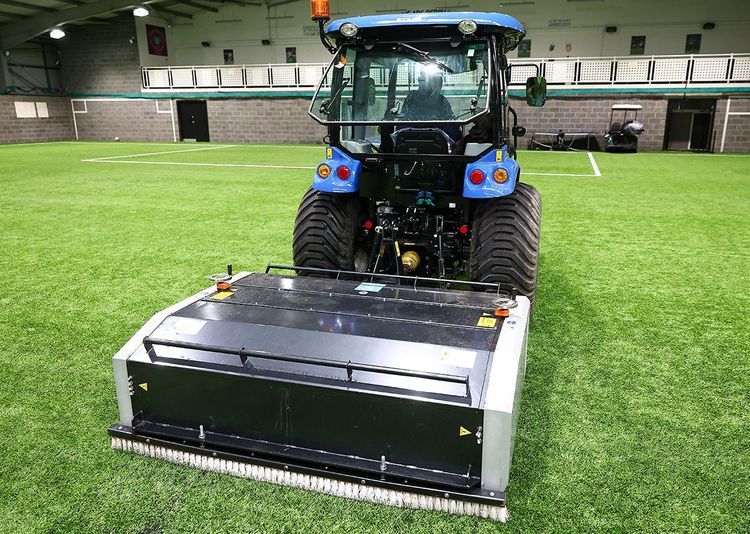
Where deeper contamination and compaction have already developed, a more intensive operation may be required. Equipment such as the SISIS SVR 1500 Deep Cleaner is designed to combine cleaning and decompaction, lifting contaminated infill, separating fine dust and debris, and returning cleaned infill to the surface.
The key point for grounds teams is that regular brushing is preventative maintenance. Deep cleaning should complement that programme rather than replace it.
Fewer Passes Can Mean Less Compaction
Efficiency matters to every professional grounds team.
Brushing a full-size football pitch can be a significant maintenance task, particularly when facilities have multiple pitches to manage. Equipment that achieves an effective brushing action in fewer passes can therefore provide a practical advantage.
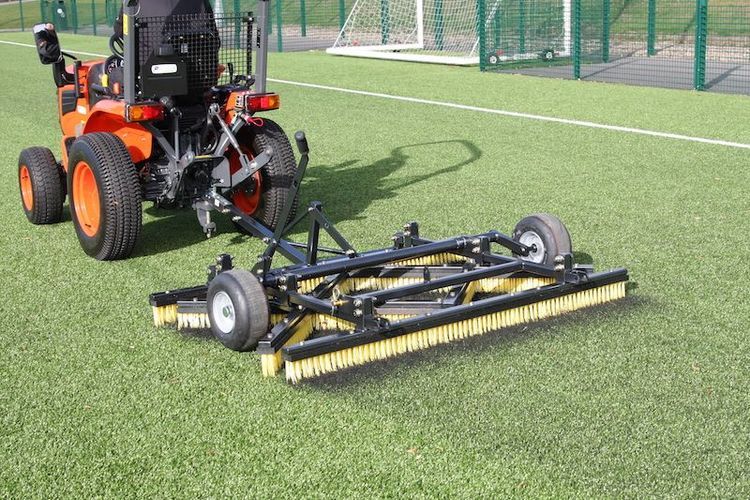
The SISIS Varibrush, for example, uses four rows of brushes to maximise the brushing effect. The multiple brushing action is designed to move infill effectively while reducing the number of passes required.
Fewer passes can mean less unnecessary traffic over the surface and potentially less additional compaction from the maintenance vehicle itself.
For busy clubs, universities, training grounds and sports facilities, that combination of maintenance performance and operational efficiency can make a significant difference.
Choosing the Right Brushing Approach
Not every artificial football pitch requires the same brushing treatment.
The type of infill, level of use, condition of the carpet and time of year should all influence the maintenance approach.
For routine maintenance, a conventional drag brush or tractor-mounted brush can be used to:
• Redistribute infill
• Maintain consistent infill levels
• Lift flattened fibres
• Improve surface presentation
• Incorporate top dressing
• Help prevent localised build-up of material
Where the pitch requires more intensive intervention, a powered or combination brushing system can provide greater agitation.
The SISIS OSCA 3 is designed as a dual-purpose system, allowing grounds teams to switch between powered oscillating brushing and conventional drag brushing. This gives operators the flexibility to carry out more aggressive periodic maintenance while still having a lighter brushing option for routine work.
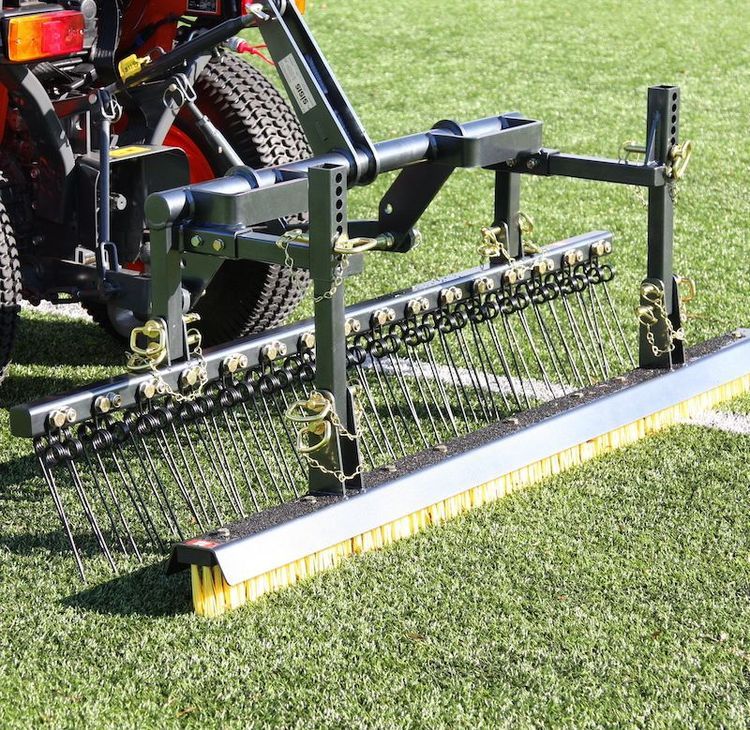
For pitches requiring both raking and brushing, tractor-mounted combination systems can be used to loosen sand or rubber infill before finishing the surface with a brush.
Brushing Should Be Carried Out in Different Directions
One of the most important principles of artificial pitch maintenance is not simply to brush regularly, but to vary the direction of brushing.
Constant player movement naturally creates directional patterns within the pile and infill. Brushing in different directions helps counteract those patterns and distributes the infill more evenly across the surface.
A consistent maintenance routine should therefore consider the whole pitch rather than repeatedly following the same route.
For professional grounds teams, recording maintenance operations can also be useful. Monitoring when a pitch was brushed, which direction was used and which areas receive the most traffic can help build a more effective maintenance schedule over time.
Brushing Is About Protecting the Investment
An artificial football pitch represents a substantial investment for any club, school, university or sports facility.
Regular brushing is a relatively straightforward maintenance operation, but its benefits can extend across the life and performance of the surface.
By keeping infill mobile, maintaining consistent levels, lifting the pile and helping prevent compaction and contamination, brushing can contribute to:
• More consistent playing characteristics
• Improved surface presentation
• Better infill distribution
• Reduced surface compaction
• Improved fibre position
• Reduced risk of localised infill loss
• Better surface permeability
• Longer-term protection of the synthetic carpet
• Reduced injury risk of players
The important consideration is to treat brushing as a planned maintenance operation rather than an occasional cosmetic exercise.
The Professional Approach
For grounds professionals, the best artificial pitch maintenance programmes combine routine, preventative and intensive operations.
Regular light brushing helps keep the surface in order between more intensive maintenance procedures. Periodic aggressive brushing can help address developing compaction and keep the infill mobile, while deep cleaning and decompaction equipment can be used when contamination or compaction has become more established.
The right equipment will depend on the pitch construction, infill type, usage and maintenance requirements.
Whether using a conventional tractor-mounted brush such as the SISIS Varibrush, a flexible brushing system, a rake-and-brush combination or the powered brushing action of the OSCA 3, the principle remains the same:
Don't wait for an artificial football pitch to show signs of deterioration before brushing it.
A consistent brushing programme is one of the foundations of effective synthetic pitch maintenance — helping grounds teams maintain the surface, protect the carpet and provide players with a more consistent and reliable playing environment.
For busy football facilities, putting the right brushing equipment and maintenance schedule in place can therefore be one of the most practical investments a grounds team can make.
Book a demo today