How Will The Rubber Crumb Ban Impact Synthetic Turf Maintenance?
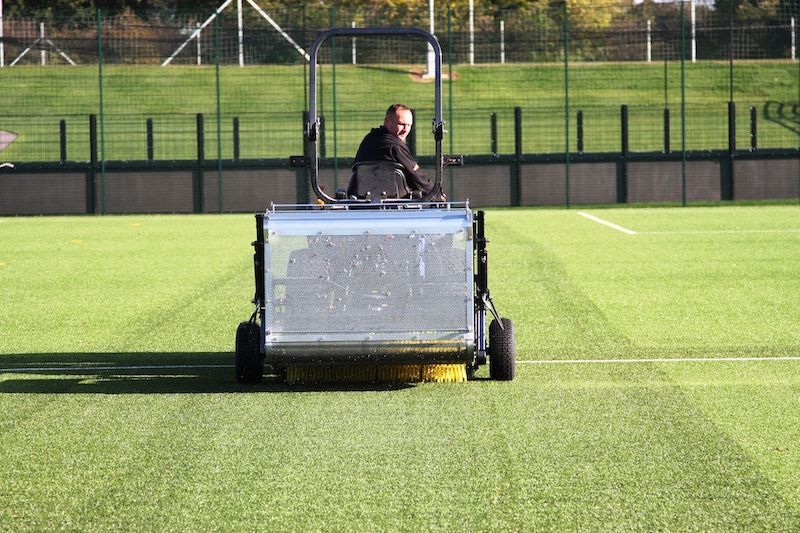
How Will The Rubber Crumb Ban Impact Synthetic Turf Maintenance?
With the purchase and installation of rubber crumb infill set to be outlawed from 2031 onwards, football pitch maintenance is entering a critical juncture. In this article, Jason Briggs, Area Sales Manager at SISIS, discusses what the ban means for current maintenance regimes, and how they’ll be impacted by the rise of alternative infills.
Take a stroll down to your local 3G football pitch and you’ll more than likely come across an abundance of rubber crumb infill. In many ways, the substance is nearly synonymous with the sport itself, and has been a mainstay of synthetic turf pitches since the late 1990s, from Sunday league all the way up to the professional game. It’s hard to imagine football without it, but in just five years, the sport may have to.
Every Last Crumb
While rubber crumb systems such as Styrene Butadiene Rubber (SBR) and Ethylene Propylene Diene Monomer (EPDM) have longed proved practical options at many levels due to the effective balance of performance, cost, and player safety, new legislation is set to curtail their use. Under the European Union’s (EU) Registration, Evaluation, Authorization, and Restriction of Chemicals (REACH) Regulation 1907/2006, the sale of rubber crumb infill is set to be banned from 17th October 2031 onwards. Notably, this move forms part of a wider push from the EU to restrict microplastics across a number of prominent product categories and is not targeted at synthetic turf specifically.
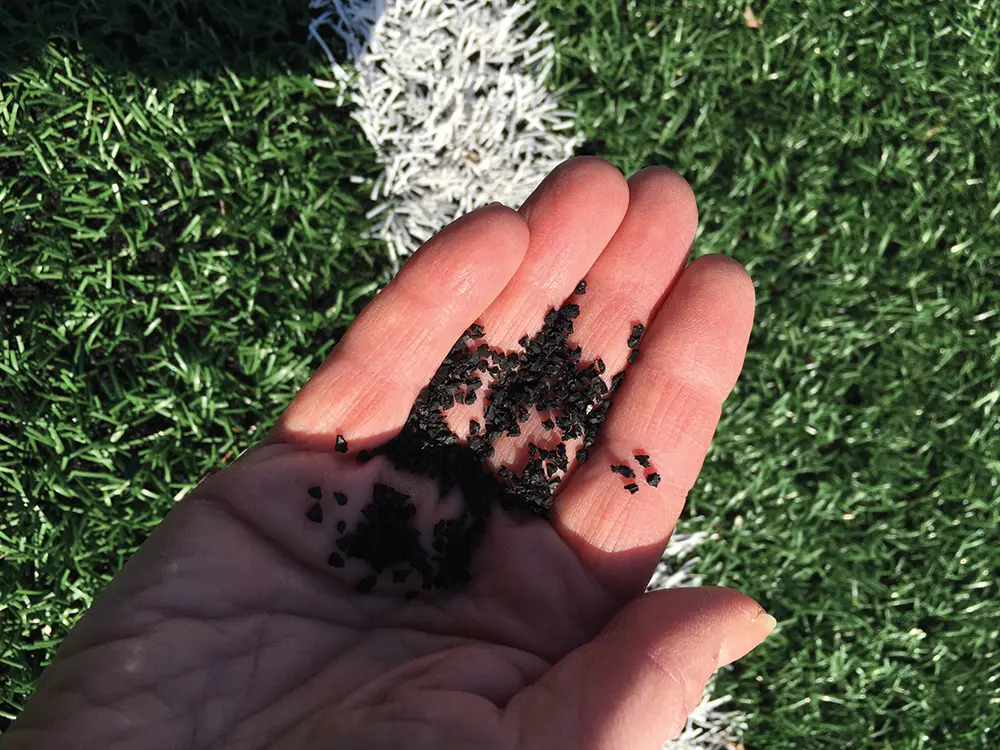
While the purchase of new rubber crumb infill is set to be banned from 2031, the use and maintenance of fields already using it will be permitted even after this date. This extends to topping up existing fields with rubber crumb infill, but operators must be able to demonstrate that this was purchased before the cutoff date if scrutinised.
While stockpiling may help to a certain extent, the average 3G pitch is topped up with between one and five tonnes of rubber crumb every year, meaning there will naturally come a point when this is no longer a viable option. Here, long term continuity planning will be key, assessing current rubber crumb stocks and usage levels to gauge how long top ups will be possible after this comes into force.
Natural Beauty
Fortunately, there are an emerging number of natural alternatives to rubber crumb infill that are being rapidly adopted across all levels of football. Some of the most popular options on the market today include cork, walnut shells, olive pits, wood chip, coconut fibre, and rice husks. While many of these can serve as a direct substitute for rubber crumb, others perform slightly differently, which is why it’s important to check with the original turf manufacturer as to which systems are supported by the field in question.
Selecting the right infill for the environment at hand is also important. Cork, for instance, is highly efficient at regulating heat, making it a good choice for pitches in direct sunlight, though can be prone to freezing in low temperatures. Factors such as these, along with cost, shock absorption, and durability, can all vary from one material to another, underlining the need to conduct extensive research into which is right for the pitch in question, and the level of football it’s used for.
There are also some key performance differences between rubber crumb infill and natural alternatives to be aware of which have a direct impact on maintenance regimes. For instance, natural infill is often lighter, making it more vulnerable to migration in strong winds, or floating away in heavy rain. Organic infills are also more sensitive to moisture, with a risk of compacting when dry, and breaking down or promoting microbial growth when wet.
With greater loss of material, more frequent and larger top ups may also be necessary, which may in turn necessitate a greater maintenance budget than with rubber crumb. However, as with rubber crumb, the same underlying principles apply – prevention is better than the cure, and erecting strong perimeters can help prevent infill loss from the outset.
Six Steps To Success
This brings us back to the headline question – what impact will the transition from rubber crumb to natural alternatives have on synthetic turf maintenance?
Despite the performance differences outlined above, provisional tests with SISIS maintenance equipment have showed that existing maintenance strategies remain just as effective, though it’s important to recognise that this may not be true of other manufacturers, and that research into alternative infills is still in its relative infancy.
Moreover, while many of the specific maintenance processes will be familiar, certain nuances around the different infill materials may bring about new considerations
With all of this said, what does the process for maintaining a pitch using alternative infills look like at specific intervals?
Weekly Responsibilities:
- Visual inspection – first and foremost, walk the pitch and look for any foreign objects, such as litter or detritus, that could pose a threat to players or the pitch itself. These can them be removed by hand, or more efficiently using a sweeper. Seams should also be inspected for wear and tear, giving attention to any fraying or lifted edges that may escalate into more serious damage, prioritising repairs where possible. Keep a close eye on moisture levels to prevent infill from drying out, or the proliferation of bacteria.
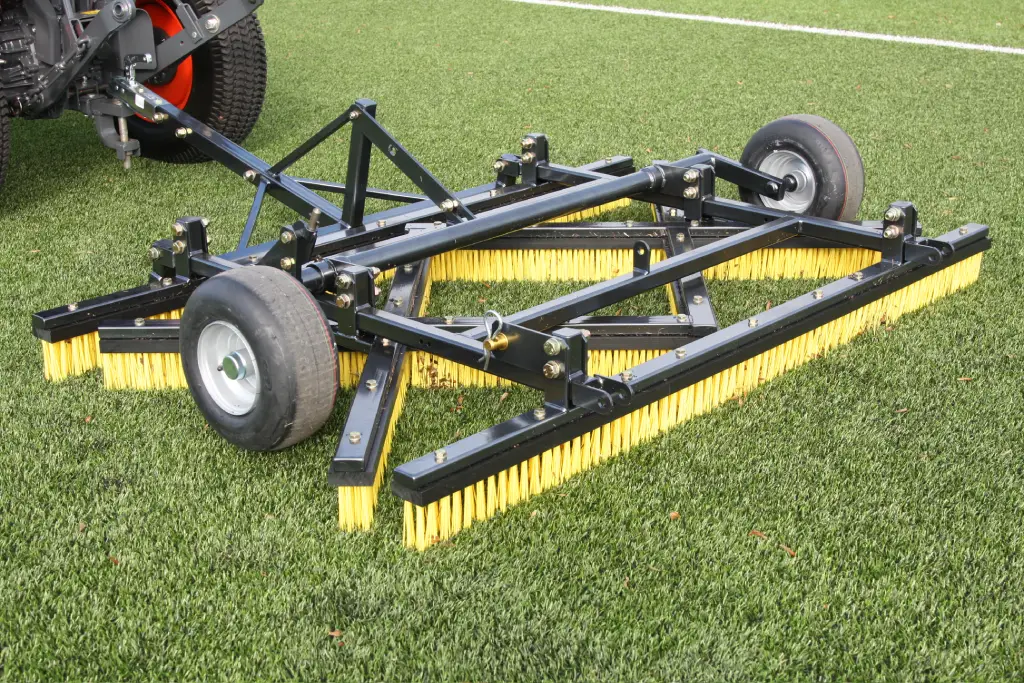
- Light brushing – following this, engage in light brushing using hand tools or towed tools, such as a triangle brush, engaging in the opposite direction to the pile. This helps to stand up the pile and even out surface infill, though groundskeepers should try to take a different route each time to reduce fibre lean.
Monthly Responsibilities:
- Topping up infill – measure infill depth, giving particular attention to high traffic areas such as the goal mouth, the penalty spot, the centre circle, and corners, and then top up using a spreader or top dresser as required. With some alternative infills presenting a higher risk of migration, greater top ups may be necessary than with rubber crumb.
- Power brushing – undertake more aggressive brushing using a tractor mounted powered brush, again taking care to try different routes each time. This agitates the upper infill layer to reduce compaction, while also minimising the risk of contamination and preventing the growth of moss and algae – a key step for organic infills. Many of these machines can be switched off to double up as a regular light brush for a more cost effective investment.
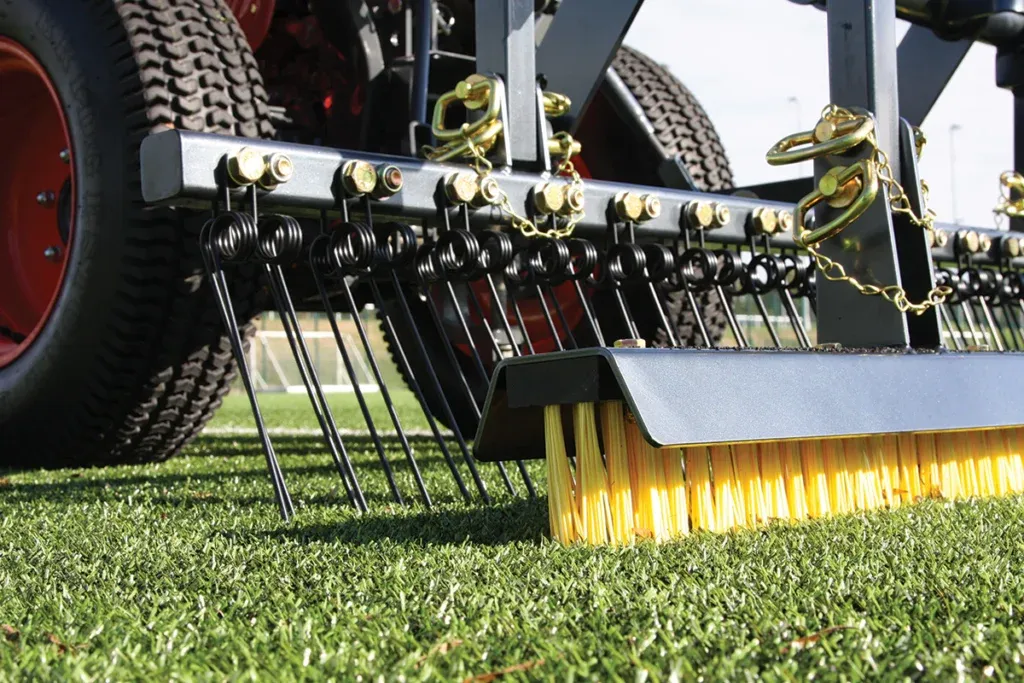
- Infill decompaction – after power brushing, decompact the infill using specialist rakes or tines to loosen it without disturbing backing or seams. Crucially, this should only be done after power brushing to prevent driving contaminants deeper into the carpet. Organic infills present a higher risk of compaction, so may require more frequent decompaction than comparative systems using rubber crumb.
Annual Responsibilities:
As outlined, the broad strokes of pitch maintenance remain the same, though there is meaningful change in the frequency and intensity of many tasks, and much nuance to unpack in terms of how different infills perform. Ultimately, groundkeepers should always refer back to the pitch or infill manufacturer’s instruction for the most accurate guidance, to ensure the surface remains clean, safe, and high performing for years to come.
Click here to discover more about synthetic turf maintenance equipment.
Click here to view the original Football Stadium Management (FSM) article.